Risk Management in Global Logistics: How to Prepare for Disruptions

“Every disruption reveals the same truth: risk management isn’t just about reacting fast — it’s about preparing smart.”

Olga Vintonovych, Operations Manager at Anchor Express

What are the most common risks in global logistics today, and which of them impact supply chains the most?

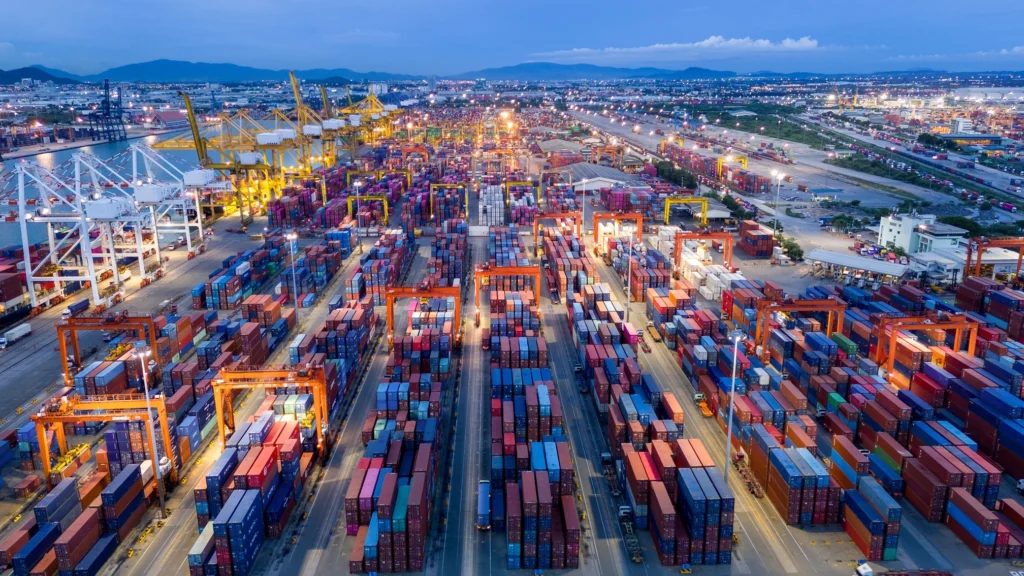
Today, the most common risks in global logistics and supply chain management include transit delays, port congestion, limited carrier capacity, regulatory and customs changes, and ongoing geopolitical instability. These challenges affect international freight forwarding, ocean freight, air cargo, and multimodal logistics operations on a daily basis.
Among these risks, geopolitical instability and unexpected transit delays have the greatest impact on global supply chains. They can disrupt established trade routes, force last-minute rerouting, increase transportation costs, and cause significant delivery delays. In a highly interconnected global logistics environment, even a single disruption can create a ripple effect across multiple regions and industries.

How can logistics companies proactively prepare for disruptions such as delays, geopolitical issues, or supplier failures?

Proactive preparation is essential for effective logistics risk management. Logistics companies should avoid dependence on a single carrier, route, or supplier. Instead, they should build redundant logistics networks by working with multiple carriers, alternative ports, and diversified transportation routes across air, ocean, and land freight.
Advanced planning, scenario modeling, and operational flexibility allow logistics providers to respond quickly when disruptions occur. Companies that invest in contingency planning and supplier diversification are far better positioned to maintain service continuity during unexpected events.

What role do data, digital tools, and real-time tracking play in effective risk management?

Data, digital tools, and real-time shipment tracking are foundational to modern logistics risk management. Digital platforms enhance visibility across the entire supply chain, improving communication, forecasting, and operational decision-making.
Real-time tracking allows logistics companies to identify potential delays, compliance risks, port congestion, or capacity constraints early. This enables proactive intervention rather than reactive problem-solving. In today’s environment, end-to-end supply chain visibility is no longer optional — it is a critical competitive advantage.

Based on your experience at Anchor Express, what practical strategies help minimize operational disruptions?

At Anchor Express, our approach to minimizing operational disruptions is built around preparation, visibility, and flexibility. We diversify carriers, routes, and transport modes to ensure we always have reliable alternatives. Our operations team closely monitors every shipment and responds immediately when issues arise.
We place strong emphasis on document accuracy and compliance to prevent customs delays and regulatory issues. Most importantly, we operate 24/7, ensuring our clients receive immediate support in urgent situations. Strong teamwork, clear communication, and round-the-clock availability allow us to keep cargo moving smoothly, even during complex or high-risk scenarios.

Here a short example of a real situation we’ve handled in ocean import:

Prior to the Chinese Spring Festival, we had to proactively rearrange several of our shipments to avoid delays during the holiday period. To ensure that the cargo could depart before operations slowed down, we re-booked a number of shipments through Dalian Port instead of Shanghai. This adjustment was necessary due to the high congestion and limited vessel availability typically experienced ahead of the Chinese holidays. By redirecting the shipments through Dalian, we were able to secure earlier sailings and maintain our delivery schedule without disruption.

What advice would you give to businesses looking to build a more resilient and flexible global logistics strategy?

Resilience starts with mindset. Businesses should view logistics as a strategic advantage, not just a cost or transportation function. Relying on a single carrier, supplier, or route increases exposure to risk.
Companies should maintain backup options, invest in logistics visibility tools, and build strong partnerships with experienced global logistics providers. Flexibility, fast decision-making, and access to 24/7 logistics support are essential in today’s unpredictable supply chain environment. A resilient logistics strategy is one that can adapt quickly while maintaining reliability and cost control.

Contact Anchor Express to discuss building a resilient logistics strategy!

Like this post?

Share the Post:

Related Posts

Join our newsletter to stay updated